
Sprinkler Winterization vs Blowout in North Texas: What Frisco Homeowners Need Before the First Freeze
Casas Irrigation Drainage & More has prepared and protected irrigation systems across Frisco, Prosper, McKinney, Plano, Allen, and the rest of Collin County for years, and every fall we hear the same question: do I need a full blowout, or is a basic winterization fine? It is a fair question, because North Texas does not freeze the way the northern states do. This guide settles the difference, grounds it in local Frisco freeze data, and gives you a clear way to decide what your own system needs before the first hard freeze arrives.
For most Frisco and North Texas homeowners, basic sprinkler winterization (shutting off the water supply, insulating the backflow preventer, draining above-ground components, and resetting the controller) is enough to prevent freeze damage during our typically mild winters. A full compressed-air blowout removes every drop of water from the underground lines and is the safer choice for systems with poor drainage, exposed piping, drip zones, or ahead of a hard arctic freeze like February 2021. The two are not competing services: a blowout is one step inside a complete winterization.
What Is the Difference Between Sprinkler Winterization and a Blowout?
Winterization is the complete process of preparing your irrigation system for cold weather. A blowout is one specific step within that process. Treating them as rival services is the most common misunderstanding homeowners run into, and it leads to either overspending on a service the system may not need or skipping protection the system does need.
What Sprinkler Winterization Includes
A standard North Texas winterization protects the parts of your system most exposed to freezing air. According to the Texas A&M School of Irrigation, the recommended method for most Texas systems is straightforward:
- Shut off the irrigation water supply at the isolation valve near the meter or backflow assembly.
- Insulate any exposed above-ground PVC piping and the backflow prevention assembly.
- Drain the water from above-ground components, including the backflow preventer.
- Reset the controller for a reduced winter watering schedule (more on that below).
You can read the official guidance directly from the Texas A&M School of Irrigation winterization page. For the majority of correctly installed Frisco systems, this level of protection is sufficient for the light to mild freezes the region normally sees.
What a Sprinkler Blowout Includes
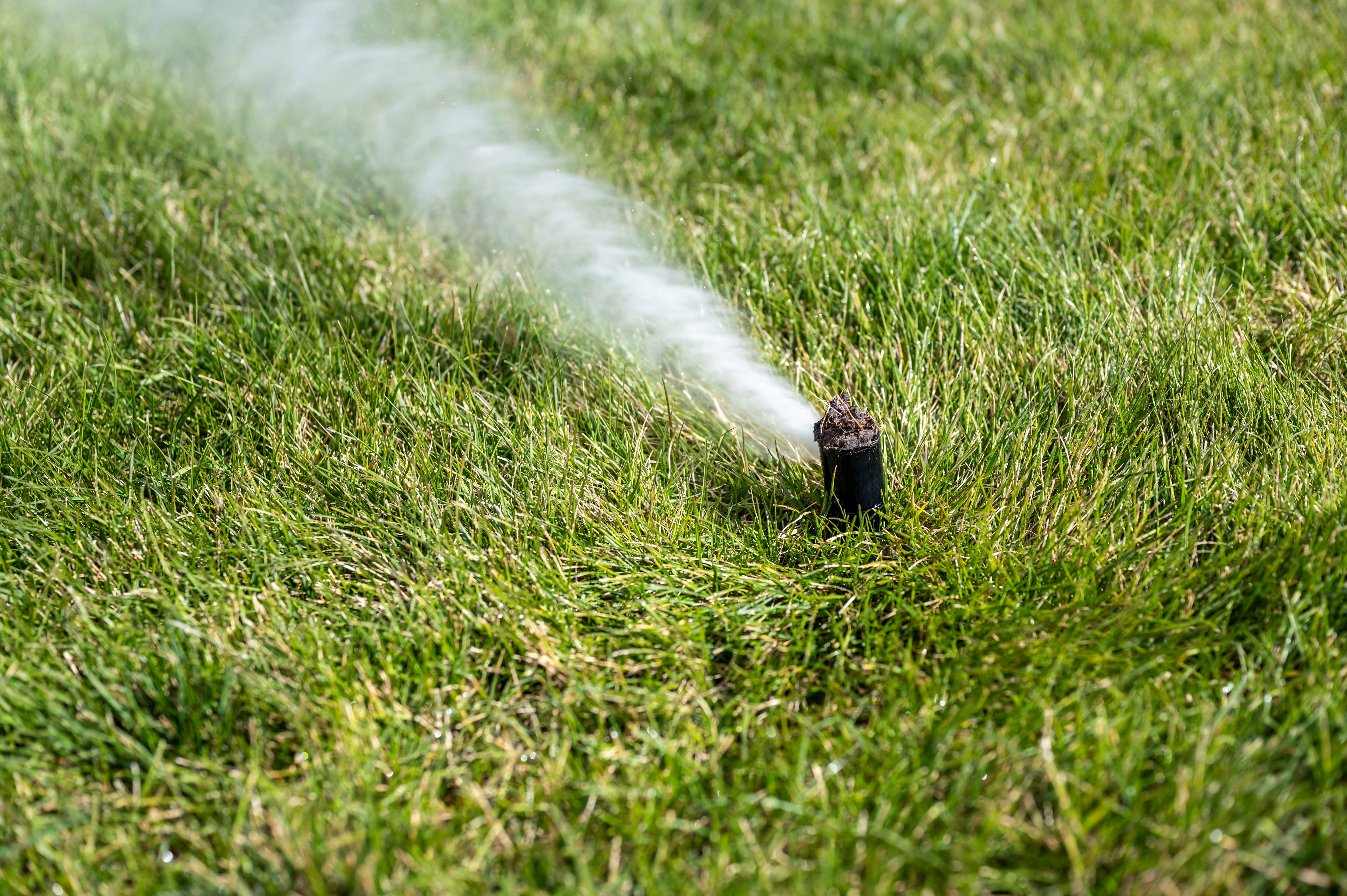
A blowout goes further. A technician connects a high-volume air compressor to the system and pushes compressed air through each zone in sequence, forcing every remaining drop of water out of the underground lines, valves, and sprinkler heads. Because no water is left to freeze and expand, a blowout is the most thorough form of freeze protection available. The catch is that it must be done with the correct equipment and pressure, which is exactly where do-it-yourself attempts go wrong.
Do Frisco Homeowners Really Need to Winterize?
Yes, and the local climate data explains why a “mild” reputation is misleading. North Texas winters are inconsistent, and inconsistency is what damages irrigation systems.
The National Weather Service Fort Worth/Dallas office reports an average first freeze around November 22, and DFW averages roughly 33 days at or below freezing each winter. Most of those freezes cluster in January, but cold fronts can drop overnight lows below 32 degrees with little warning well before then. The lesson is that the first freeze date is an average, not a promise.
North Texas homeowners also remember February 2021, when an arctic outbreak held temperatures below freezing for days and came close to the regional record for consecutive hours below 32 degrees. Events like that turn trapped water inside pipes into a serious repair problem. Water expands as it freezes, and when that expansion happens inside a sealed irrigation line, the pipe, valve, or fitting can crack. The damage usually stays hidden until spring, when you turn the system on and discover leaks, dead zones, or a higher water bill.
THE LOCAL FREEZE PICTURE (FRISCO / DFW)
- Average first freeze: around November 22
- Average freezing days per winter: roughly 33
- Most freezes occur in January, but early cold fronts are common
- February 2021 proved hard, multi-day freezes do happen here
Winterization vs Blowout: Which Does Your North Texas System Need?
Use the guide below to gauge what your specific system calls for. When more than one blowout indicator applies to your property, a professional assessment is the safe move.
| If Your System Has... | Recommended Approach |
|---|---|
| A standard in-ground system, good drainage, properly installed | Basic winterization is typically sufficient for North Texas. |
| Drip irrigation zones or micro-spray lines | Manual draining or drain valves; drip lines are fragile and often need special handling. |
| Exposed or shallow piping, or known low spots that hold water | Blowout recommended to clear water a gravity drain will miss. |
| A history of freeze damage or spring leaks | Blowout plus an inspection to catch existing weak points. |
| A hard arctic freeze in the forecast (multi-day, well below freezing) | Blowout for maximum protection before the event. |
| Uncertainty about how the system was installed | Professional assessment first; the right method depends on the layout. |
A note many homeowners find surprising: the Texas A&M School of Irrigation points out that most landscape irrigation systems in Texas are not even designed for a blowout, because they are built for a climate where the ground rarely freezes down to the buried lines. That is why Casas Irrigation does not push a blowout on every customer. We assess the system first and recommend the method that actually fits your property. If your system does need attention beyond winterization, our Frisco irrigation services team can handle it.
Why the Backflow Preventer Is the Component That Matters Most
If you protect only one part of your irrigation system this winter, make it the backflow preventer. It sits above ground, fully exposed to freezing air, and it is the single most expensive component to replace. Texas requires irrigation systems to use a testable backflow prevention assembly to keep irrigation water from flowing back into the drinking supply, so this is not an optional part you can simply remove.
Because the assembly is exposed, it freezes faster than the buried lines below it. Draining it and insulating it (an insulated cover or wrap rated for outdoor use) is the highest-value step in any North Texas winterization. If your backflow preventer is already showing cracks, leaks, or test failures, it is better to address it before the cold arrives than to discover it in the spring.
Casas Irrigation repairs and replaces these assemblies as part of our sprinkler backflow preventer service. If a line has already failed, our sprinkler pipe and line leak repair covers the rest of the system.
When Should You Schedule Winterization in Frisco?
Aim to have your system winterized by mid-November, before the average first freeze around November 22, or sooner if a cold front is forecast. Scheduling early matters for two practical reasons. First, the first freeze date is only an average, so an unexpected cold snap can arrive before you have booked anything. Second, irrigation companies fill their winterization calendars quickly once the first cold front hits the news, and last-minute appointments are hard to find exactly when everyone wants one.
There is no need to rush it months ahead, either. Blowing out a system too early means you may have to run it again during a warm stretch, which can require a second service. The sweet spot in North Texas is late fall, once you are finished with regular watering for the season or once cold weather is clearly on the way.
Can You Winterize or Blow Out a Sprinkler System Yourself?
Basic winterization steps, such as shutting off the supply and insulating the backflow preventer, are reasonable for a careful homeowner. A full blowout is a different story and is best left to a professional. Here is the honest breakdown of the risks.
- Over-pressurization is easy to do. Residential systems should never exceed 80 PSI, and flexible poly pipe should stay even lower, around 50 PSI. Push too hard and you can crack the very pipes you were trying to protect, which leaves you with the exact repair you were avoiding.
- Home compressors usually cannot do it. A blowout needs a high-volume compressor rated for enough cubic feet per minute to clear a zone. The small unit in most garages moves air but not enough volume to push water all the way out.
- Missing one zone undoes the whole job. It only takes a single zone with water left sitting in it to fail in a freeze, and you will not know until spring.
- Warranties can be voided. Some manufacturers and installers require documented professional servicing. Saving on a service today can cost coverage on the whole system later.
There is also a Texas-specific reason to hire a pro: irrigation work in Texas is regulated, and systems are meant to be serviced by a licensed irrigator. A professional clears every zone, uses the correct pressure, and inspects for problems while the system is open, which is the part a do-it-yourself blowout always skips.
What Happens If You Skip Winterization?
Skipping winterization does not guarantee damage, but it raises the odds every time temperatures dip below freezing. The most common outcomes show up the following spring:
- Cracked or burst underground pipes from water expanding as it froze
- Broken or leaking valves and fittings
- A damaged backflow assembly, the costliest component to replace
- Dead or dry zones, uneven coverage, and a higher water bill from hidden leaks
If you have already had a freeze and suspect a problem, do not run the system blind. Our Frisco sprinkler repair team can locate and fix freeze damage, and if standing water around the system is part of the issue, our drainage services can address the root cause so it does not repeat.
Do Not Forget Winter Watering in North Texas
Winterizing your system does not always mean shutting it off completely until spring. North Texas lawns and landscapes do not fully shut down the way northern ones do. Winter rye and fescue lawns still need occasional water, winter flowers stay in bloom, and a dry winter with passing cold fronts can stress plants that would otherwise be fine. This is why resetting the controller for a reduced winter schedule is part of a proper winterization, rather than simply flipping the system off.
If your controller is outdated or hard to program, our sprinkler controller and timer service can set you up with a smart winter schedule that waters only when your landscape needs it.
When to Call Casas Irrigation Drainage & More
Casas Irrigation Drainage & More is a locally trusted irrigation company serving Frisco, TX and the surrounding Collin County communities. Our experienced, licensed and insured technicians assess each system before recommending a service, so you only pay for the protection your property actually needs. We winterize systems the right way for the North Texas climate, perform full blowouts when a system calls for one, and inspect for freeze-vulnerable components before the cold sets in. You can see our work and reviews on our Google Business Profile, and we offer free estimates on every job.
Ready To Protect Your System Before The First Freeze?
Do not wait for the first cold front to find out whether your sprinkler system is protected. Call Casas Irrigation Drainage & More today at 469-200-5111 to schedule sprinkler winterization or a professional blowout in Frisco and across Collin County. Prefer to reach out online? Visit our contact page to request your free estimate. Licensed, insured, and ready to keep your irrigation system safe all winter.
Frequently Asked Questions (FAQs)
What is the difference between sprinkler winterization and a blowout?
Winterization is the full process of preparing an irrigation system for winter, which includes shutting off the water supply, insulating the backflow preventer, draining above-ground components, and resetting the controller. A blowout is one step within winterization that uses compressed air to push all remaining water out of the underground lines. A blowout is part of winterization, not a competing service.
Do I really need to winterize my sprinkler system in Frisco, TX?
Yes. While North Texas winters are usually mild, DFW averages a first freeze around November 22 and roughly 33 freezing days per winter, and hard multi-day freezes like February 2021 do occur. Trapped water that freezes inside pipes can crack lines, valves, and the backflow preventer, with damage often appearing the following spring.
Does every Frisco sprinkler system need a full blowout?
No. The Texas A&M School of Irrigation notes that most Texas irrigation systems are not designed for a blowout, and basic winterization protects most properly installed systems through light to mild freezes. A blowout is recommended for systems with poor drainage, exposed piping, drip zones, a history of freeze damage, or ahead of a forecasted hard freeze.
When should I schedule sprinkler winterization in North Texas?
Aim for mid-November, before the average first freeze around November 22, or sooner if a cold front is forecast. Scheduling early avoids last-minute booking delays and protects the system before an unexpected cold snap. Late fall, once you are done watering for the season, is the ideal window.
Can I blow out my sprinkler system myself?
It is not recommended. A blowout needs a high-volume air compressor and careful pressure control. Residential systems should never exceed 80 PSI, and flexible poly pipe should stay near 50 PSI. Over-pressurizing can crack pipes, most home compressors lack the volume to fully clear a zone, and missing a single zone can still lead to freeze damage.
Why is the backflow preventer so important to protect?
The backflow preventer sits above ground, fully exposed to freezing air, and is the most expensive component to replace. Texas requires a testable backflow assembly on irrigation systems, so it cannot simply be removed. Draining and insulating it is the highest-value step in any North Texas winterization.
What happens if I skip winterizing my sprinkler system?
Skipping winterization raises the risk of cracked or burst pipes, broken valves, a damaged backflow assembly, dead zones, and higher water bills from hidden leaks. The damage usually stays hidden until spring when the system is turned back on.
How long does professional sprinkler winterization take?
Most residential systems take roughly 30 to 60 minutes, depending on the number of zones and the complexity of the layout. A professional also inspects components while the system is open, which helps catch issues before the next watering season.
Should I turn my sprinkler system off completely all winter?
Not necessarily. North Texas lawns and landscapes do not fully go dormant. Winter rye and fescue lawns, winter flowers, and dry cold spells may still call for occasional watering, so resetting the controller for a reduced winter schedule is usually better than shutting the system off entirely.
What areas does Casas Irrigation serve for winterization?
Casas Irrigation Drainage & More provides sprinkler winterization and blowout services in Frisco and throughout Collin County, including Prosper, McKinney, Plano, Allen, Little Elm, The Colony, and surrounding North Texas communities. Call 469-200-5111 or request a free estimate online.