
Sprinkler Winterization vs Blowout: Which One Does Your Frisco System Actually Need?
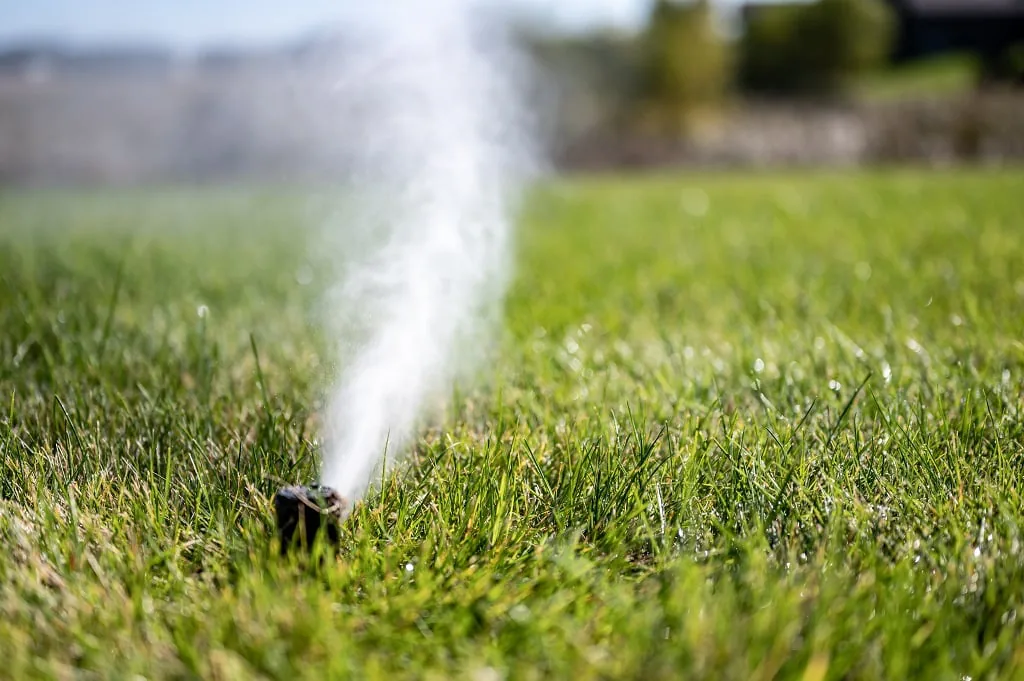
A sprinkler blowout uses compressed air to push water out of underground lines, valves, and heads. Sprinkler winterization is the full cold-weather shutdown: turning off the irrigation supply, setting the controller, draining and insulating the backflow preventer, and adding a blowout only when the system needs it. Texas A&M’s School of Irrigation notes that most Texas systems are not designed for a blowout, so most Frisco homes need a proper winterization, with a blowout reserved for poly pipe, low spots, exposed piping, or a history of freeze damage.
Every fall, Frisco homeowners ask our team the same question: do I need a blowout, or is winterizing enough? The honest answer depends on how your system was built, not on what works in Colorado or Michigan. Casas Irrigation Drainage & More is a Frisco-based irrigation company led by founder Luis Casas and operating under Texas Licensed Irrigator #LI0024249. We service systems across Frisco, Prosper, McKinney, Plano, Little Elm, and the rest of Collin and Denton counties.
This guide explains the real difference between the two services, shows how Frisco’s own watering rules move your shutdown date earlier than most people expect, and gives you a simple way to decide what your system needs this year.
What Is the Difference Between Sprinkler Winterization and a Blowout?
Winterization is the whole process, and a blowout is one optional step inside it. Sprinkler winterization covers everything that protects an irrigation system through freezing weather. A blowout is a specific technique where a technician connects a high-volume air compressor and clears each zone with air until no water is left in the buried pipe.
National lawn articles often treat the two words as the same thing because, in northern states, the ground freezes deep enough that nearly every system gets blown out. North Texas works differently, and that difference is the reason so many Frisco homeowners get conflicting advice.
Factor | Sprinkler Winterization | Sprinkler Blowout |
What it is | Full seasonal shutdown and freeze protection | Compressed-air purge of lines, valves, and heads |
Main goal | Protect the parts exposed to freezing air | Remove water from buried pipe |
Typical steps | Supply off, controller set, backflow drained and insulated, exposed pipe insulated, inspection | Compressor connected downstream of the backflow, each zone cleared in sequence, pressure monitored |
Equipment | Hand tools and outdoor-rated insulation | High-volume compressor with a pressure regulator |
Needed in most Frisco yards? | Yes, every year | Only for certain systems or conditions |
Risk if done wrong | An exposed backflow assembly can crack | Too much pressure can split fittings or damage heads |
Why Does Texas Guidance Differ From Most Blowout Articles?
Because most Texas irrigation pipe is buried below the depth our ground normally freezes. The Texas A&M School of Irrigation winterization guidance explains that the blowout method is mainly used in the northern United States, where the ground freezes down to buried pipelines, and that most landscape irrigation systems in Texas are not designed for a blowout.
For light to mild freezes across most of Texas, Texas A&M recommends four steps instead:
- Turn off the irrigation controller.
- Shut off the irrigation water supply at the isolation valve near the water meter or backflow prevention assembly.
- Insulate any PVC pipe exposed above ground.
- Drain water from above-ground components such as the backflow prevention assembly.
That is why a manufacturer’s how-to or a national home blog may say a blowout is the only safe method, while a licensed Texas irrigator may tell you your system does not need one. They are describing different climates and different installations.
How Cold Does It Actually Get in Frisco?
Cold enough, often enough, and occasionally for days at a time. The National Weather Service DFW freeze summary gives the clearest local picture:
- Average first freeze: November 22
- Average last freeze: March 12
- Earliest recorded freeze: October 22 (1898)
- February 2021: 139 consecutive hours below freezing from February 13 to 19, after another 93 hours below freezing earlier that week
- Longest stretch on record: 295 consecutive hours below freezing in December 1983
On a typical freezing night, properly buried PVC rides it out. The parts that fail are the exposed ones: the backflow assembly, above-ground PVC near the house, shallow drip tubing in beds, and valve boxes that hold water. Those are the components we find damaged when Frisco systems restart in spring.
How Do Frisco Watering Rules Change Your Winterization Timing?
In Frisco, the city effectively sets your shutdown date: November 1. Under the Frisco Water Efficiency Plan, updated in May 2024, automatic spray and rotor watering of turfgrass is not allowed from November 1 through March 31, because warm-season grass is dormant. Frisco also prohibits overseeding and watering cool-season grasses during winter.
Two year-round rules matter here too. Frisco does not allow an irrigation system to run during any form of precipitation or when temperatures are below 40°F, and the use of leaking or damaged irrigation systems is prohibited. Drip irrigation, bubblers, and micro-irrigation for trees and plants are still allowed in winter, up to two hours daily, when weather station data supports it. You can confirm the current schedule on the City of Frisco watering schedule page.
What this means for your system
- Plan for late October. Your spray and rotor zones must be off by November 1 anyway, so there is no reason to wait for the average first freeze around November 22.
- Drip zones change the plan. If you water beds, young trees, or foundation plantings with drip, a full shutdown is not your only option (see the hybrid approach below).
- Neighboring cities set their own rules. Prosper, McKinney, Plano, and Little Elm each publish their own watering schedules, so check your water provider if you live outside Frisco.
- Spring restart lines up with April 1, when Frisco’s spring and summer schedule begins.
Which Does Your System Need: Winterization, Blowout, or Both?
Start with a proper winterization every year, then add a blowout only when your system’s design or condition calls for it. Use this guide to match your property to the right approach.
If your system has | Recommended approach | Why |
Standard PVC laterals buried at normal depth, good drainage | Standard winterization | Buried PVC is rarely the failure point in a North Texas winter |
An above-ground pressure vacuum breaker (PVB) | Winterization with careful backflow draining and an insulated cover | The PVB is the most exposed, freeze-prone part of the system |
A double check assembly in a below-grade box | Winterization, with the box kept dry and the lid secure | Less exposed, but a flooded box can freeze in a long cold snap |
Flexible poly pipe or drip tubing | Manual draining or a low-pressure blowout by a licensed pro | Poly and drip parts tolerate far less air pressure than PVC |
Low spots, shallow lines, or exposed piping near the house | Winterization plus a blowout | Gravity draining leaves water trapped in low sections |
A history of spring leaks or freeze damage | Blowout plus a full inspection | Past failures point to vulnerable sections |
A multi-day arctic outbreak in the forecast | Full shutdown and drain, with a blowout if the system is a candidate | A February 2021 type event reaches parts a normal winter does not |
Unknown installation history | Professional assessment first | The right method depends on layout and materials |
What Happens During a Professional Sprinkler Winterization?
A proper visit protects the exposed parts first and checks the system while it is open. A typical professional winterization in Frisco follows this order:
- Locate and close the irrigation isolation valve near the meter or backflow assembly.
- Set the controller to off or rain mode so it keeps its programming but will not open valves.
- Relieve pressure and drain the backflow assembly through its test cocks, leaving it in the position its type calls for.
- Insulate the backflow assembly and any exposed PVC with outdoor-rated covers.
- Drain or blow out individual zones only where the pipe type, layout, or condition requires it, using lower pressure on poly and drip.
- Inspect for broken heads, weeping valves, cracked risers, and wet spots, and note anything that needs repair before spring.
- Record which zones were cleared and what was found so the spring startup is fast and predictable.
How Does a Sprinkler Blowout Work, and What Can Go Wrong?
Air volume does the work, not high pressure, and that is exactly where most do-it-yourself blowouts go wrong. During a blowout, the compressor connects at a port downstream of the backflow assembly. One zone is opened at a time and cleared in short cycles until the heads release only mist. Commonly cited industry limits are about 80 PSI for rigid PVC and about 50 PSI for flexible poly pipe, and many systems need less.
The most common problems we see after a blowout gone wrong:
- Over-pressurization that cracks fittings, splits poly pipe, or blows caps off heads.
- Gear-drive rotors damaged by spinning dry on compressed air for too long.
- Air forced through the backflow assembly instead of entering downstream of it.
- Underpowered garage compressors that move air but not enough volume, leaving water sitting in the lines.
- Missed zones, which leave one section exposed to the next hard freeze.
There is also a Texas licensing side to this. Irrigation work on systems tied to a public water supply falls under TCEQ rules in 30 TAC Chapter 344, and anyone you hire for irrigation services must hold a TCEQ landscape irrigation license and display the number on their vehicle and paperwork. You can learn more on the TCEQ landscape irrigation program page.
Can You Winterize Your Own Sprinkler System in Frisco?
Yes for the basic steps, but a blowout is better left to a licensed irrigator. Here is a practical split:
Reasonable for most homeowners
- Closing the irrigation supply valve and switching the controller to off or rain mode.
- Fitting an outdoor-rated insulated cover over the backflow assembly.
- Checking that valve box lids are in place and the boxes are not holding water.
Better handled by a professional
- Any blowout, especially on poly pipe or drip zones.
- A backflow assembly that is dripping, cracked, or has failed a test.
- Systems with unknown installation history or recurring spring leaks.
Not sure which group your system falls into? Casas Irrigation will check your backflow assembly, pipe type, and zone layout, then tell you plainly whether a standard winterization is enough. Call 469-200-5111 or request an estimate on our contact page.
The Hybrid Approach: Keeping Drip Zones Available Through a Frisco Winter
Spray zones off, drip zones available, backflow protected. Because Frisco allows drip, bubblers, and micro-irrigation in winter when weather data supports it, some homeowners want to keep beds and newly planted trees watered during dry stretches. A hybrid setup makes that possible:
- Turn off every spray and rotor zone in the controller by November 1.
- Leave the supply on only if you will use drip zones, and keep the backflow assembly insulated.
- Never run any zone when temperatures are below 40°F, which is both a city rule and a freeze risk.
- Shut off the supply and drain the backflow completely before any multi-day freeze.
A smart irrigation controller with weather data and freeze skip makes this far easier to manage. If your beds are not on dedicated drip irrigation yet, winter is a good time to plan the change.
What Should You Do When a Hard Freeze Is Forecast After Shutdown?
Recheck the exposed parts a day or two before the cold arrives. Even a winterized system benefits from a quick walk-around:
- Confirm the irrigation supply is closed and the controller is still off.
- If you kept drip zones active, close the supply and drain the backflow before the freeze.
- Make sure the backflow cover is in place, dry, and secured against wind.
- Lift valve box lids and check for standing water; a box full of water can freeze around the valves.
5. After the freeze, do not run the system to test it if you suspect damage. Watch for water at the backflow or wet spots in the yard when the supply is reopened, and call for sprinkler pipe and line leak repair.
What Does Freeze Damage Look Like in Spring?
Most freeze damage stays hidden until the system restarts in April. Watch for these signs during your first spring cycle:
- Water spraying or dripping from the backflow body or bonnet (handled by our backflow preventer repair service).
- A soggy patch or bubbling soil over a buried line.
- A zone that will not build pressure, with heads that barely pop up (zone repair).
- A valve that will not shut off or a zone that keeps running (valve repair and replacement).
- A water bill higher than your normal spring baseline.
Because Frisco prohibits operating leaking or damaged systems year-round, it pays to catch these early. A careful spring startup restores pressure slowly, runs every zone, and adjusts heads before the watering season begins. If freeze damage is part of a bigger problem, our full sprinkler repair team can handle it in the same visit.
Why Frisco Homeowners Call Casas Irrigation for Winterization
What you get | Why it matters |
Licensed Irrigator #LI0024249 | Your system is serviced under Texas TCEQ irrigation licensing |
A local Frisco office | 110A Rose Ln, Suite 204, Frisco, TX 75036 |
Founder-led service | Luis Casas, Founder & CEO, oversees the work |
An assess-first approach | We recommend a blowout only when your system actually needs one |
Repairs from the same team | Backflow, valves, pipe, heads, wiring, and controllers |
See what Frisco neighbors say about our work |
If standing water around valve boxes or low areas keeps causing trouble, our drainage services can fix the cause so it does not repeat next winter. Homeowners who want this handled every year can also look at an irrigation maintenance plan that covers both the fall shutdown and the spring startup.
Sprinkler Winterization Across Frisco and Nearby Cities
Casas Irrigation provides winterization, blowouts, and spring startups throughout Frisco and the surrounding communities, including:
Frequently Asked Questions About Sprinkler Winterization vs Blowout
Is a sprinkler blowout the same as winterization?
No. Winterization is the complete cold-weather shutdown of an irrigation system, including closing the supply, setting the controller, and draining and insulating the backflow assembly. A blowout is one optional step that uses compressed air to clear water from the buried lines.
Do I need to winterize my sprinkler system in Frisco, TX?
Yes. DFW averages its first freeze around November 22, and multi-day freezes like February 2021 do happen. Frisco also prohibits spray and rotor watering of turfgrass from November 1 through March 31, so shutting down and protecting the system each fall is both practical and required.
Does every Frisco sprinkler system need a blowout?
No. Texas A&M School of Irrigation notes that most Texas irrigation systems are not designed for a blowout. A blowout makes sense for poly pipe, drip zones, low spots, exposed piping, or systems with a history of freeze damage.
When should I winterize my sprinkler system in Frisco?
Late October is the best window. Frisco turns off automatic turf watering on November 1, and the earliest freeze on record in DFW arrived on October 22, so booking before November 1 protects the system without cutting the fall watering season short.
Can I water my lawn in Frisco during winter?
Not with sprinklers. Frisco does not allow automatic spray or rotor watering of turfgrass from November 1 through March 31. Drip irrigation, bubblers, micro-irrigation, soaker hoses, and hand watering with a shutoff nozzle are allowed for trees and plants, up to two hours daily, when weather data supports it.
What PSI is safe for a sprinkler blowout?
Commonly cited industry limits are about 80 PSI for rigid PVC and about 50 PSI for flexible poly pipe, and many residential systems need less. Air volume clears the water, so raising pressure does not make a blowout more effective and can crack fittings.
Can I use my garage air compressor to blow out my sprinklers?
Usually not effectively. Most home compressors cannot supply enough air volume to clear a full zone, so water stays in the pipe. A licensed irrigator uses a high-volume compressor with a regulator and clears each zone in short cycles.
How do I protect my backflow preventer from freezing?
Close the irrigation supply, drain the assembly through its test cocks, and fit an outdoor-rated insulated cover. The backflow assembly sits above ground, so it is the part most likely to crack during a North Texas freeze.
What should I do if my sprinkler system froze?
Keep the system off and do not run it to test it. Once temperatures are back above freezing, look for water at the backflow assembly or wet spots in the yard when the supply is reopened, and call a licensed irrigator to locate and repair any cracked pipe, valves, or fittings.
When should I turn my sprinklers back on in Frisco?
Frisco’s spring and summer watering schedule begins April 1, which also falls after the March 12 average last freeze. Restart slowly, run each zone, and check for leaks. Frisco also offers free residential sprinkler checkups through the myFRISCO app.
Protect Your Frisco Sprinkler System Before the First Freeze
Do not wait for the first cold front to find out whether your system is protected. Call Casas Irrigation Drainage & More at 469-200-5111 to schedule sprinkler winterization or a professional blowout in Frisco and across Collin County. We will check your backflow assembly, pipe type, and zones, then tell you plainly whether you need a standard winterization or a blowout. Prefer to book online? Visit our contact page to request your estimate. Licensed Irrigator #LI0024249, based right here in Frisco.